How to Research Ownership History of a Foreclosed Property
Want to check who owned a foreclosed property before? Learn how to trace the ownership history of a foreclosed property and spot title issues.
Scalance Global

On this page
- Key Takeaways
- Why Ownership History Matters After a Foreclosure
- Step 1: Start With the Parcel Number, Assessor Record and Vesting Deed
- Step 2: Work Backward Through the Grantor and Grantee Indexes
- Step 3: Identify the Foreclosure Links in the Chain
- Step 4: Follow Mortgage Assignments and MERS Transfers
- Step 5: Account for Name Changes, Estates, Divorces and Entities
- Step 6: Look for Gaps, Wild Deeds and Breaks in the Chain
- How Far Back Should You Search?
- Online vs In-Person County Records
- When to Order a Professional Search
- Frequently Asked Questions
- Conclusion
To research the ownership history of a foreclosed property, start with the parcel number and the current vesting deed, then work backward through the county grantor and grantee indexes one owner at a time. Pull every foreclosure document along the way, from the lis pendens or notice of default to the final deed, and trace the mortgage assignments to confirm who had the right to foreclose. Check name changes, estates, divorces and entity owners, look for gaps or wild deeds, and order a professional search when the record stops making sense.
Key Takeaways
A foreclosure adds several documents to a property's history, and each must connect cleanly to the next. Here is what matters most.
Begin with the parcel number, the assessor record and the deed that vests title in the current owner.
Search the grantee index to move backward through owners, then the grantor index to see what each owner signed away.
A foreclosure leaves its own trail: a lis pendens or notice of default, often a substitution of trustee, a certificate of sale in some states, and a foreclosure deed.
The mortgage assignments, including transfers tracked through MERS, should lead from the original lender to the party that foreclosed.
Name variations, deaths, divorces and LLC owners are where most researchers lose the thread.
Gaps and wild deeds are common in foreclosure files and usually need a closer look or a professional search.
The steps below follow the order a title examiner would use. Recording and foreclosure rules differ by state and county, so confirm the local rules for your property.
Why Ownership History Matters After a Foreclosure
A foreclosure moves title from a borrower who defaulted to a new owner, often the lender, which then sells the home as an REO asset, a stage our article on REO asset management covers. The new owner only gets what the foreclosure validly delivered. If the borrower was not the true owner, a co-owner was left out, or the wrong party foreclosed, the deed can be weaker than it looks. Liens are part of the picture too, and our guide to foreclosure liens, records and ownership covers which ones survive a sale.
Ownership history shows whether everyone with an interest was accounted for and each transfer was properly signed. We run this kind of review every day through default and foreclosure searches, but a buyer can do a solid first pass.
Step 1: Start With the Parcel Number, Assessor Record and Vesting Deed
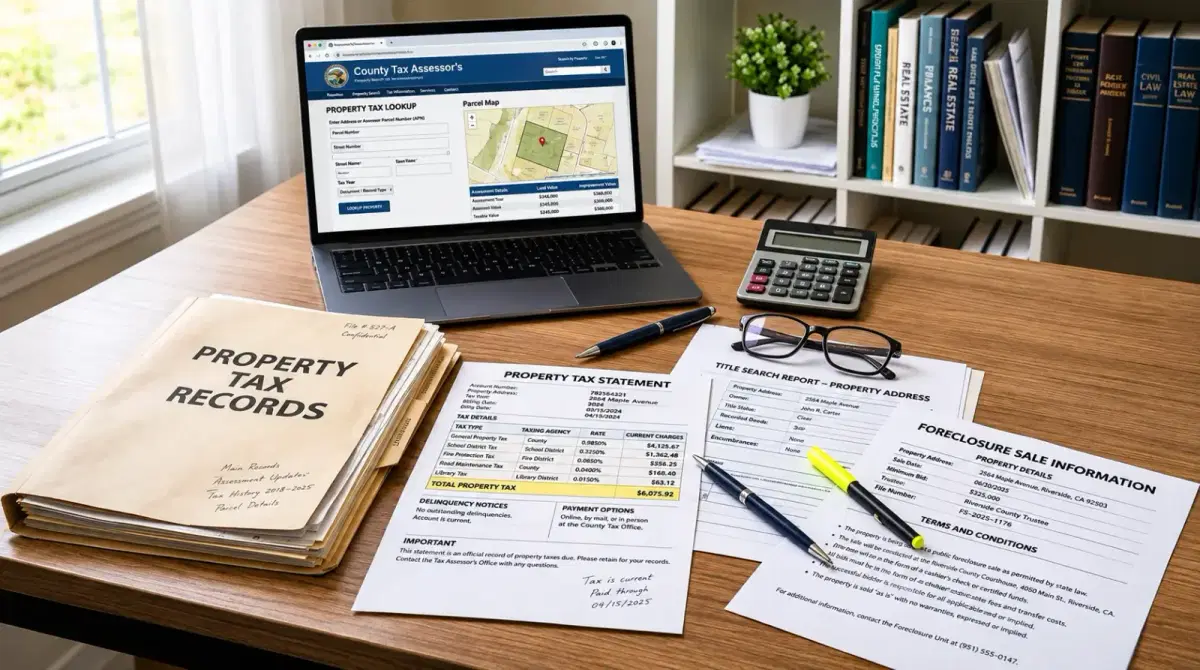
Every search needs an anchor, and here it is the parcel number. The county assessor assigns it, and it ties the street address to a legal description and a tax account. Note the parcel number, the owner on the tax roll, the mailing address and any sale history the assessor shows. If you have never done a basic search before, our walkthrough on how to do a title search on a property in the US covers the general steps.
Treat the assessor record as a lead, not proof. The tax roll is built for billing and can still show the borrower's name months after a sale. Tax status matters for other reasons, which our piece on property tax for real estate investors explains.
Next, find the vesting deed. This is the most recent recorded deed that puts title in the current owner, and for a foreclosed property it is often the foreclosure deed itself or a later deed out of the lender. Write down the grantor, the grantee, the recording date, the instrument number or book and page, and the legal description. A stated consideration or transfer tax stamp hints at whether it was a normal sale.
Step 2: Work Backward Through the Grantor and Grantee Indexes
Most counties index documents by name. The grantor index lists parties giving an interest and the grantee index lists those receiving one. A few places keep a tract index by parcel, but name indexes are the norm.
To build the chain, search the grantor named on the vesting deed in the grantee index. That shows you the deed by which that person or company acquired the property, and the grantor on that deed becomes your next search. Repeat until you reach your chosen starting point. Compare each legal description with the last, since an unexplained change is a warning sign.
Backward is only half the job. Search each owner in the grantor index from the date they acquired the property to the date they conveyed it. That forward search catches mortgages, easements, partial conveyances and stray deeds the owner signed while holding title. The chain of title is only complete when both directions line up.
Step 3: Identify the Foreclosure Links in the Chain
Which foreclosure documents you find depends on whether the state uses judicial foreclosure, nonjudicial foreclosure under a deed of trust, or both.
Lis Pendens and Notice of Default
In a judicial foreclosure the lender files a lawsuit, and a lis pendens is usually recorded in the land records to warn the world that the case affects title. Its case number is your bridge to the court file. In a nonjudicial foreclosure the first recorded step is often a notice of default, followed by a notice of sale. Their dates place the foreclosure on a timeline, and a foreclosure timeline calculator can show whether the gaps between them look normal for the state.
Substitution of Trustee
The trustee named in a deed of trust is often not the one who runs the sale, so the lender or its successor records a substitution of trustee. Check that it was signed by whoever held the beneficial interest then and recorded before the new trustee acted. A sale run by a trustee who was never properly appointed is a classic weak link.
Certificate of Sale and the Foreclosure Deed
The document that moves title goes by several names. After a nonjudicial sale, the trustee records a trustee's deed. In judicial states, a sheriff, referee, commissioner or similar officer conducts the sale and signs a sheriff's deed, referee's deed or other court officer's deed, often after the court confirms the sale. In states with a redemption period after the sale, the winning bidder may receive only a certificate of sale at first, and the deed comes later if no one redeems. A redemption period calculator helps you see when that window should have closed.
Compare the foreclosure deed with the judgment or notice of sale. The grantee should be the winning bidder or someone the bid was properly assigned to. When the lender wins with a credit bid and later sells, there should be a clean deed out from that same entity, which is the point where REO resale support picks up the file on the sell side.
Step 4: Follow Mortgage Assignments and MERS Transfers
The foreclosing party should be able to trace its interest back to the original lender. Start with the mortgage or deed of trust the borrower signed, then search the land records for every assignment of that instrument. Each assignment should come from the party that received the previous one, and the last assignee should match the plaintiff in the lawsuit or the beneficiary who instructed the trustee.
Many loans name Mortgage Electronic Registration Systems, known as MERS, as the mortgagee of record acting as nominee for the lender and its successors. Transfers between MERS members are tracked in a private registry rather than recorded with the county, so the land records can look quiet for years. Look for the 18 digit Mortgage Identification Number, or MIN, printed on the security instrument. With it, or with the property details, you can use the free MERS ServicerID lookup to identify the current servicer and, in some cases, the investor. Before a foreclosure you will often see an assignment out of MERS to the foreclosing lender, recorded shortly before the case or the notice of default.
Standing is whether that party had the right to foreclose, and the rules vary by state. In many places, holding the note matters more than holding a recorded assignment, so an assignment dated after the complaint is not automatically fatal. Still, an assignee that does not match the plaintiff, an assignment signed by a bank that had already merged away, or a slightly wrong trust name all deserve questions. Servicers face the same issues during transfers, which is why our MSR transfer support for servicers and the foreclosure title search lender's checklist both stress the assignment chain.
If you are buying a defaulted loan instead of the property, the same trail decides whether you can enforce it, and our guide on how to buy mortgage notes explains what to request from the seller.
Step 5: Account for Name Changes, Estates, Divorces and Entities
Search full names, initials, maiden and married names, suffixes and common misspellings. One owner can show up as "Katherine A. Lopez," "Kathy Lopez" and "K. Lopez Martinez" in the same chain, and the index will treat them as three strangers.
If an owner died, title may have passed through a probate estate, a trust, a transfer on death deed, or by survivorship to a joint owner. Look for an executor's or administrator's deed, letters from the probate court, an affidavit of death or an affidavit of heirship. In a foreclosure, the question is whether the heirs or the estate were properly made part of the case, and the probate court file is often where the answer sits.
Divorces cause similar trouble. A decree may award the house to one spouse with no new deed recorded, or a quitclaim may follow years later. Check whether both spouses signed the mortgage and whether both were named in the foreclosure.
Corporate and LLC owners need a stop at the Secretary of State's business search. Confirm the entity existed when it signed, that the person signing had authority, and whether it later merged, changed its name or dissolved. Private lenders run the same checks before funding, as our pre-funding diligence service shows.
Step 6: Look for Gaps, Wild Deeds and Breaks in the Chain
A gap appears when the grantor on one deed never shows up as a grantee earlier in the chain. The missing deed may be misindexed, recorded under a misspelled name, or never recorded at all.
A wild deed is a recorded deed from someone who has no connection to the chain, so a normal name search will not lead you to it. In foreclosure files, breaks often have familiar causes. The auction winner assigns its bid to an affiliate but no assignment is recorded. A foreclosure deed names a trust slightly differently from the plaintiff. A borrower deeds the house to a relative just before default, and that grantee is never named. A sale is later set aside by a court, but the order is filed only in the case and never recorded.
Some breaks are fixed with a corrective deed or a recorded affidavit, and our article on title issues that delay a closing covers how those repairs usually work. Others need a quiet title action or work with a referral and curative support team.
How Far Back Should You Search?
There is no national rule. Examiners set their own search periods, and some states have marketable record title acts that let a search stop at a root of title recorded a set number of years ago, commonly 30 or 40 years. For a foreclosed property, go back at least far enough to reach the deed that vested title in the borrower, the foreclosed mortgage itself, and any interest recorded before that mortgage that the foreclosure could not have cut off.
Tax sale properties raise similar questions about how much history a new deed really clears, which our guide to tax deed due diligence addresses.
Online vs In-Person County Records
Many recorders offer online indexes and images, but coverage varies, and some counties index only recent years or charge per page. Older records may still sit in bound books, plat cabinets or microfilm that you can only see at the recorder's office. Court, probate and divorce files usually sit with the clerk of court.
A document missing online may still exist. Ask the recorder which years are digitized and plan a visit if the chain runs earlier. Our post on real estate technology automating title operations looks at how digitization is changing this work.
When to Order a Professional Search
Your own review is good for spotting red flags early, but it does not replace a professional search when money is on the line. Order one before closing, when you need title insurance, when the chain involves an estate, divorce or several assignments, or when the county is unfamiliar.
An examiner knows the local indexes and produces a report a title insurer or lender will accept. Investors buying several properties can use title services and ancillary services to keep the same standard across every file.
Frequently Asked Questions
Is the sales history on a real estate website the same as a chain of title?
No. Listing sites pull sales from data feeds and often skip foreclosure deeds, quitclaims and estate transfers.
Will a title commitment show me the full ownership history?
Usually not. A commitment shows current vesting, requirements to close and exceptions to coverage. For earlier deeds, ask the title company for copies or order an ownership and encumbrance report.
Can I find out what the property sold for at the foreclosure sale?
Often yes. Trustee's deeds and court officer's deeds frequently state the amount bid, and in judicial states the sale report or order confirming the sale in the court file usually shows it as well.
Can an earlier owner's title policy lower my premium?
In some states, a buyer may qualify for a reissue or prior policy discount when the property was insured within a recent period. Ask your title agent, and run rough numbers with a title insurance calculator.
Conclusion
Researching the ownership history of a foreclosed property means building the chain one link at a time. Anchor the search with the parcel number and vesting deed, move backward through the indexes, pull every foreclosure document, and confirm that the assignments lead to the party that foreclosed. Then test it for name changes, estates, divorces, entities and gaps, and bring in a professional before you commit funds. Investors who buy at tax sales can apply the same habits with our guide to tax lien due diligence.
This article is for general information only and is not legal, tax or investment advice. Foreclosure, recording and title laws vary by state, so consult a licensed attorney, title professional or financial advisor about your specific property or purchase.
Want this handled for you?
Title & settlement, investor diligence, private money lending and automation technology — run by one operational partner. Tell us where your pipeline is stalling.
Talk to Scalance